When Your AI Hires a Committee: Inside the Rise of Multi-Agent Systems
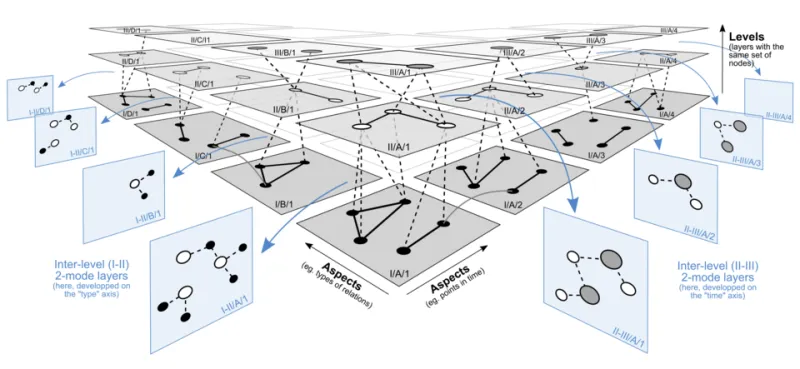
Photo: Original: Martin Grandjean Upload: SlvrKy, CC BY-SA 4.0, via Wikimedia Commons
The single-chatbot era is quietly ending. In its place, a stranger and more interesting architecture is taking hold: teams of AI agents, each with a specialty, a role, and a job to do — coordinating through shared memory, structured messages, and sometimes outright argument.
Multi-agent systems are not a fringe experiment. They are showing up in software development pipelines, customer operations, and research workflows across the American tech sector. Understanding how they work — and how they break — is becoming essential knowledge for anyone building with AI.
The Cast of Characters
Most production multi-agent setups follow a recognizable structure. A coordinator or planner agent decomposes a task and assigns work. Specialist agents execute: one writes code, another reviews it, a third searches documentation, a fourth checks the math. A critic agent challenges outputs before they ship. A memory layer keeps everyone oriented.
Popular open frameworks have standardized these patterns, offering roles like planner, executor, and reviewer that developers assemble like components. The appeal is real: decomposing complex work into narrow roles keeps each agent within its competence, mirrors how human teams organize, and creates natural checkpoints where errors can be caught.
Five Failure Modes Worth Knowing
For all the promise, agent swarms fail in ways that are equal parts instructive and absurd:
- The infinite handshake — two agents politely deferring to each other in a loop, burning compute while accomplishing nothing
- Confidence cascades — one agent's hallucination gets accepted by the next, gaining false credibility with each handoff until fiction becomes deliverable
- Goal drift — a delegation chain five layers deep produces something technically responsive to the original request but unrecognizably wrong
- Cost blowouts — each agent spawning sub-agents, each sub-agent consuming API calls; a simple task becomes a five-figure invoice
- Deadlock and sabotage — critic agents rejecting everything, executor agents rewriting each other's work, a digital committee meeting that never adjourns
Anyone who has sat through a corporate meeting will recognize the pattern. Agents, it turns out, inherit our institutional pathologies.
Design Patterns That Actually Work
The teams getting value from multi-agent systems tend to share several disciplines.
Bounded loops. Hard caps on iterations and total spend prevent the handshake problem from becoming a budget event. Every agent interaction should have a referee with the authority to stop play.
Structured handoffs. Free-form agent chatter is where hallucinations breed. Successful systems pass typed, validated outputs between roles — schemas, not prose.
Human checkpoints at high stakes. The best deployments treat agents like junior staff: capable of drafts and legwork, supervised before anything consequential happens. Autonomy is granted incrementally, based on measured performance, not vibes.
Asymmetric roles. Systems work best when each agent has a distinct, non-overlapping mandate. Duplication invites the worst failure mode of all: two confident agents disagreeing with no mechanism to resolve it.
The Verdict on Swarms
Multi-agent architectures are neither the productivity revolution their most ardent proponents promise nor the gimmick skeptics assume. They are a powerful pattern with a narrow set of conditions under which they shine: tasks that genuinely decompose, roles that genuinely differ, and oversight that genuinely exists.
Where those conditions hold, agent teams can outperform any single model — catching each other's errors, dividing labor, and scaling effort in ways one context window never could. Where they don't, the result is the most expensive committee meeting ever convened.
The lesson for builders is the same one organizations have been learning for a century: adding people to a broken process multiplies the breakage. Adding agents to a broken workflow does precisely the same — only faster, and at GPU prices.